Full-Magnetic: How the Pen Opens and Closes
Magnetism instead of threads — less wear, a crisper return.
2026-10-08
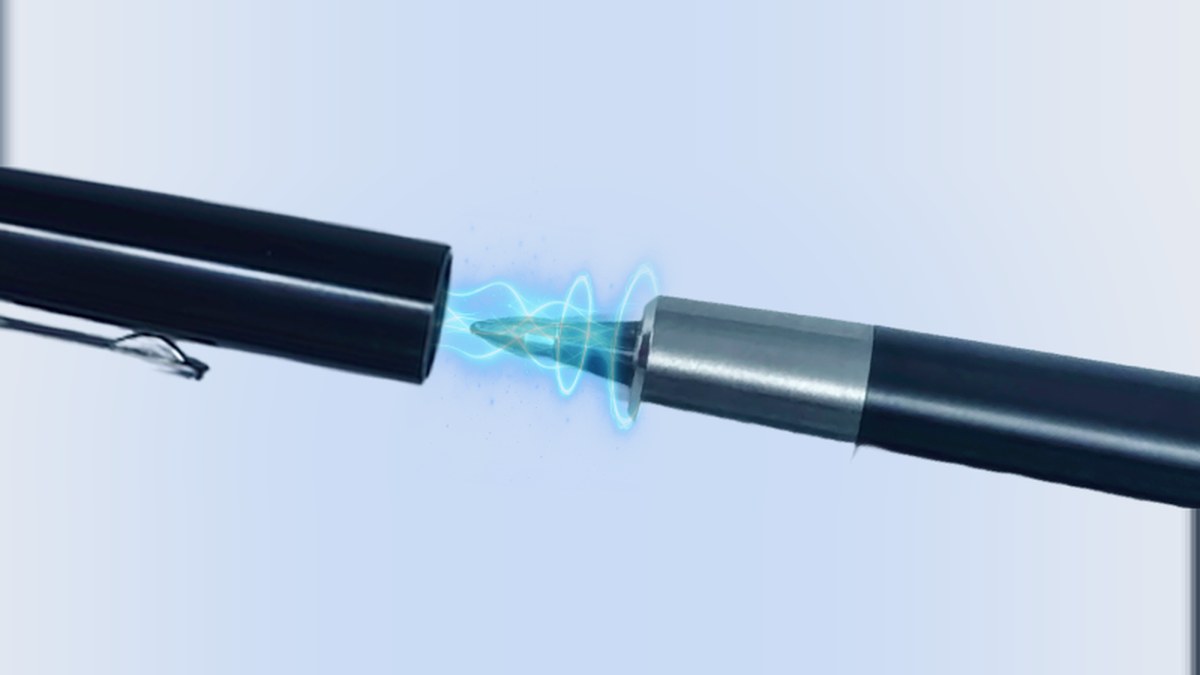
Traditional pens close by thread or friction fit: every open-close cycle is friction, and every cycle consumes the exact "screwed-in-right" feel. A new pen twists smoothly; a year later it either will not tighten or overtightens. We simply removed the thread — the joint between cap and body is handled by magnets.
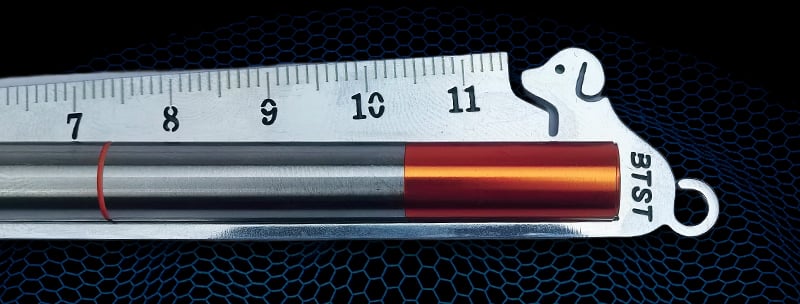
Why N52 neodymium
Magnets are not all equal. NdFeB (neodymium-iron-boron) has the highest energy product among commercial magnets, and N52 is a high grade within it — stronger, steadier pull for the same volume. For a pen that means two things:
- Crisp closure: a clear pull from several millimetres away, closing with a clean click — no mushy travel.
- Decades without decay: demagnetisation of neodymium is a physical process measured in decades. Under normal temperatures (kept away from sustained 80°C+ heat and strong external fields) the pull barely changes over time. Threads wear, friction fits loosen; a magnetic circuit has no wearing surface.
The magnetic circuit is designed, not stuffed
Anyone can glue a magnet into a cap; the feel is the hard part. Too strong and one-handed opening is a struggle; too weak and the cap opens in your bag. We treat the magnetic circuit as a structural component: magnet dimensions, the arrangement of mating poles, the contact angle of the closing faces, together with how the metal shell shields and guides the field — all of it decides whether the snap feels solid or hollow. Every damping grade is tuned, the same way a spring's force curve is tuned.
What magnetic closure unlocks structurally
Dropping the thread is not just another closing method — it enables forms a threaded pen cannot take:
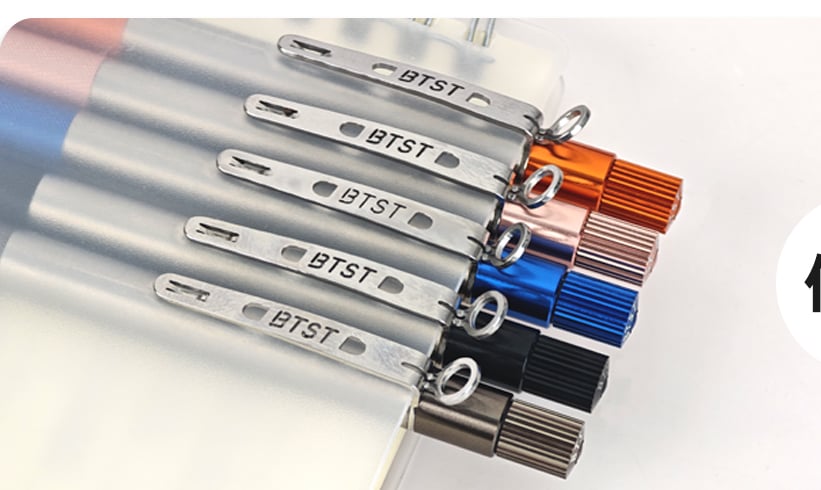
- One structure, five colours: the same magnetic assembly runs through all five colourways — lined up in a row, they form a tidy metal queue. Collecting and comparing colours comes naturally.
- Zero-wear opening: a thread wears its mating face on every turn; magnetic faces have no relative sliding. After a hundred thousand cycles the feel is unchanged — which is why "magnetic failure" can be listed as covered in the 10-year warranty: we know its decay curve is nearly flat.
- Clean structure and lines: no exposed thread step; the silhouette stays continuous and the grip transitions naturally.
Two usage notes
- Neodymium dislikes heat: do not leave the pen on a dashboard in summer sun (sustained 80°C+ damages magnetism), and keep it away from pacemakers and magnetic-stripe cards.
- If the closing faces pick up iron filings or a paperclip, wipe them off — the magnetic force is unaffected.
Magnetism is not a new invention; turning it into a structure that lasts ten years takes magnetic-circuit design plus 0.01 mm fitting tolerances. The feel of a metal pen is always a by-product of precision.