How to Evaluate a Metal Pen Manufacturer: A Buyer’s Checklist
Six dimensions, eight questions — turning what a factory claims into what you can verify. Ours is shown alongside each item as a reference point.
2026-10-15
The most common way buyers misjudge a metal-pen factory is treating adjectives as facts. "Advanced equipment, strict quality control, experienced team" — every factory says this, and none of it can be verified. This checklist is not about what to listen for. It is about what to ask, and how to tell whether the answer is real.
Dimension 1 · Equipment and precision — ask for tolerance, not for "advanced equipment"
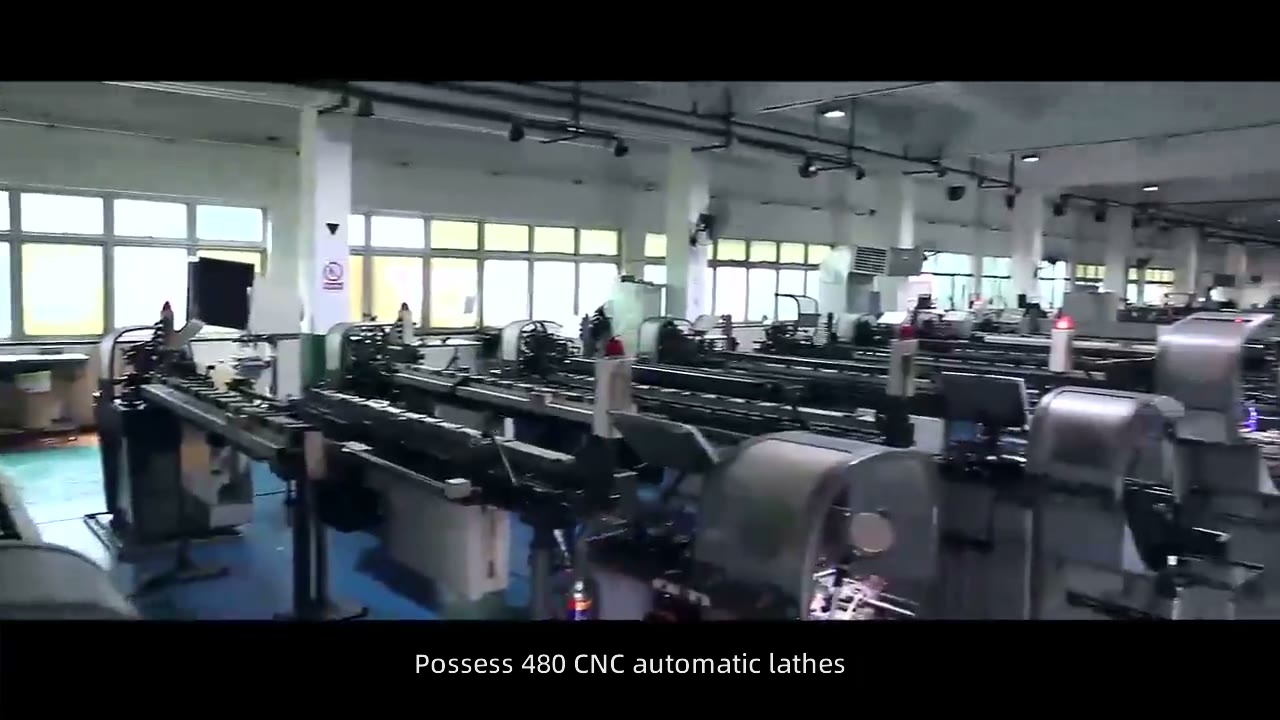
Ask: What is your machining tolerance, and what measuring equipment verifies it?
How to judge: A factory that cannot give a number, or answers with "industry-leading", can mostly be ruled out. Tolerance is testable: ask to see first-article inspection records, or measure the sample yourself. Precision figures tell you more than an equipment list, because an expensive machine can still run loose.
Our approach: CNC tolerance 0.01 mm; turning precision 0.001 on the Shaohua lipstick pen; watch-grade tolerance on the Dog 2.0 scale surface. These figures are in our product documentation, and you are welcome to measure a sample against them.
Dimension 2 · Material authenticity — solid or plated
Ask: Are stainless components solid throughout, or surface-plated? Can you provide material certification?
How to judge: A cut edge shows it — plated parts reveal the base material where the coating wears through. You can also require a 304 certificate and a third-party test report number.
Our approach: The pen bay and barrel of the Dog 2.0 are solid 304 stainless (the grade used in food-contact and medical applications) — not plating, not a wrap. Our 304 tube stock is third-party RoHS tested, report no. U10202230519605-1E (May 2023), and a material certificate is available.
Dimension 3 · Certification and IP — where registered, and is it checkable
Ask: Are the designs and structures registered? In which markets? Can I look up the registration numbers?
How to judge: Registration numbers are publicly searchable (EUIPO, China, J-PlatPat). Only a matching number with a consistent rights holder counts as "has IP"; saying "we have our own designs" with nothing to show is the same as having none.
Our approach: Our designs and structures are registered in China, the EU and Japan. EU Registered Community Designs 015074738-0001, 015074738-0002 (pen holder) and 015086258-0001 (pen) — all verifiable in the EUIPO public register.
Dimension 4 · Sampling — is it free, and how is timing set
Ask: Is sampling free? How long does a sample take? How long from sample approval to production?
How to judge: Factories willing to break down the sample lead time (tooling required? custom colour?) have usually done this work before; "it's quick" means they have not really assessed it. Inspect the sample itself: consistent finishing, no burrs, no colour inconsistency.
Our approach: Samples are free, with the lead time agreed case by case (whether new tooling is needed, whether colour is custom) and estimated during the requirement discussion. We mostly avoid moulds — bodies are CNC-machined from solid metal — which shortens the path for small custom runs.
Dimension 5 · Minimums and pricing logic — will they put numbers in writing
Ask: What is the minimum order quantity? What happens below it? How is the price calculated?
How to judge: A factory that can explain its pricing basis (process complexity and volume) is more reliable than one saying "market price, let's talk". Also check whether the quoted price can go into a contract unchanged.
Our approach: In-stock wholesale from 1 piece, with mixed colours welcome; customization and OEM from 100 pieces, and below that please enquire first. We quote on process complexity (engraving area, custom colour, packaging) and volume — the number we give is the number we can sign.
Dimension 6 · Lead time and after-sales — how commitments are framed
Ask: Can the lead time be written into the contract? What is the warranty? How are defects handled?
How to judge: This is the dimension most easily lost to empty phrases. An honest supplier separates "I can commit to this now" from "this needs assessment" — and a firm date promised before requirements are even discussed deserves caution.
Our approach: The production schedule follows the delivery date agreed in the contract. We do not quote a specific date at quotation stage, because lead time depends on process and volume. If you have a hard deadline, state it in your inquiry and we will tell you honestly whether we can meet it. Our written warranty and defect-handling terms are available on request.
A reverse test: will they let you verify
The most effective screening question is simple: propose a factory audit or third-party inspection, and watch the reaction. A factory that agrees is confident in its quality control; one that deflects probably has a reason. The same logic applies to documents: a factory willing to hand over test report numbers, material certificates and publicly searchable registration numbers is worth a further conversation than one repeating "we are very standardised".
The purpose of this checklist is not to eliminate anyone. It is to turn the conversation from listening to stories into collecting evidence.