A Cap That Needs No Thread: Why Magnetic Closing Is a Level of Finish
The problem with a threaded cap is not smoothness but two other things: it wears, and it cannot be opened quickly with one hand. A magnetic joint sidesteps both, at the cost of adding a set of magnetic parts.
The threaded cap has been used for over a century, and its problem is not the thread itself but two things that only show up after wear. Threads wear, and once worn every opening has to be realigned; worse, it takes two hands — one holding the pen, the other turning. A magnetic joint sidesteps both.
What happens to a thread over time
A thread pair is metal sliding against metal, so every rotation grinds the two surfaces together. The smooth action at the start comes from factory tolerance; after a year some of that tolerance has already been worn away — a looser feel and slight play are simply the natural end of that curve.
The practical issue is the motion. In meetings, signing and note-taking, a threaded cap needs two hands; a magnetic cap closes as the hand approaches and comes off when you pinch it. That is not an efficiency point but a context point: some contexts do not suit being half a second slower.
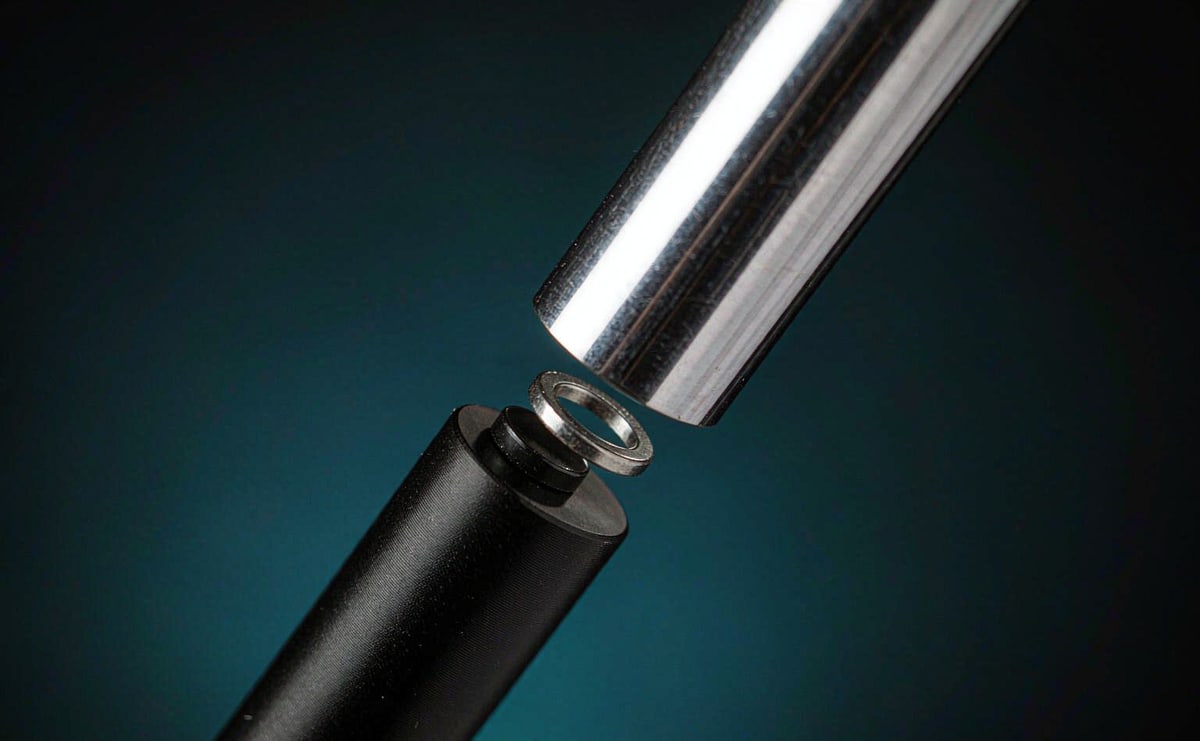
The moment of a magnetic joint: the cap is drawn into place by axial approach, with no thread to align and no rotation needed
The structural cost
| Point | Threaded cap | Magnetic cap |
| Opening action | Align, then rotate | Approach / pull away |
| One-handed use | Difficult | Done directly |
| Long-term wear | Thread surfaces keep grinding, feel loosens | Holding force largely unchanged |
| Part count | Fewer | Adds magnetic parts and mating faces |
| Metal interference | None | Needs to avoid strong fields |
| Loss risk | Can be lost when removed | Can be lost when removed |
The cost should be stated plainly: a magnetic joint adds a set of magnetic parts and mating faces, which costs more and complicates the structure; and like every magnetic joint it needs to stay away from strong fields, and the sound of metal meeting metal cannot be fully removed. Loss of the cap is solved by neither — the real difference is that a threaded cap can be found again on a string, while a magnetic cap has to be looked for.
One more thing is worth naming: the motion of a magnetic opening is itself worth watching. Lifting the cap off and pressing it back on a meeting table is clean and decisive in sound and movement — this is where a maker is willing to pay for experience.
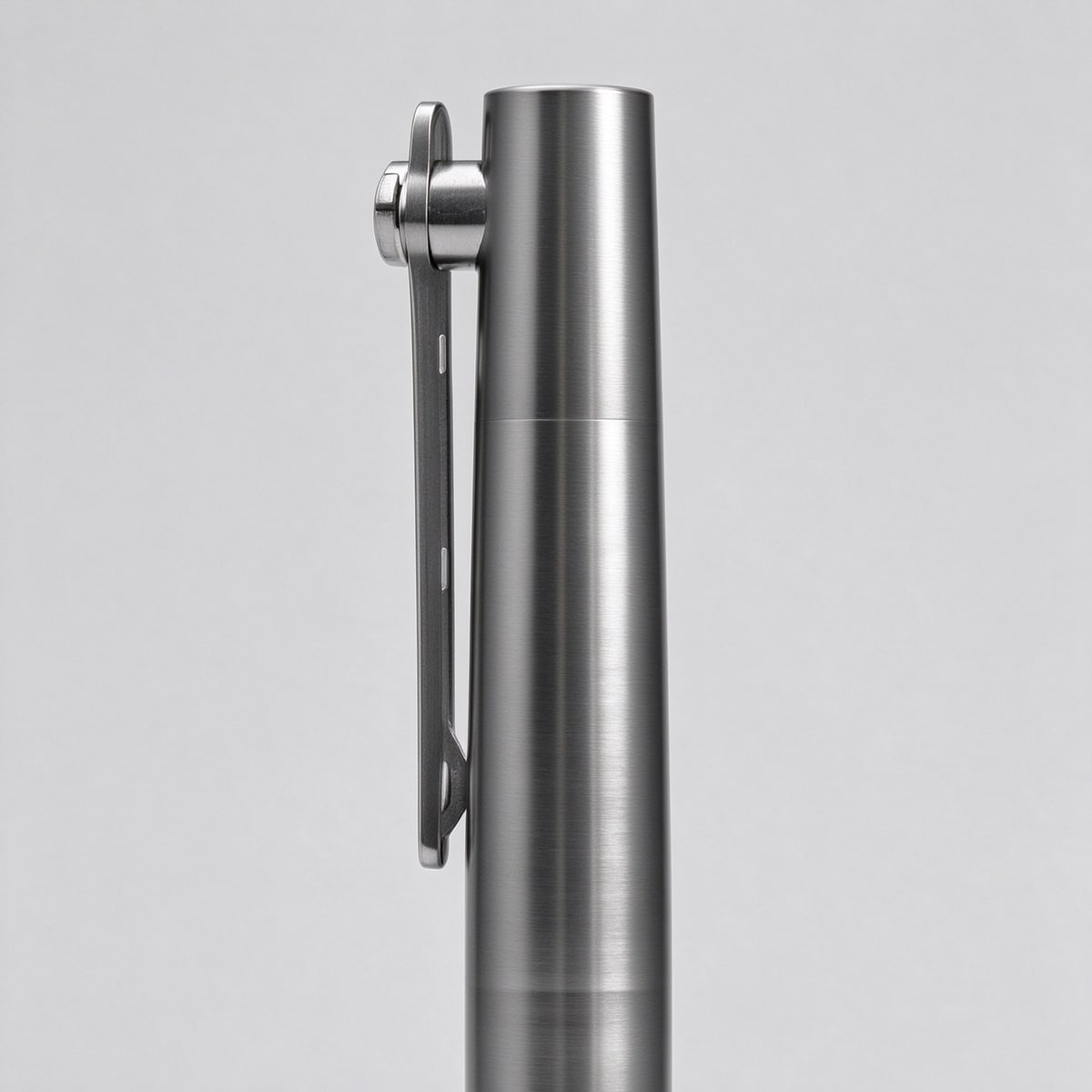
The one-piece clip: cut from the same piece of metal, with no joint to the barrel, so the contact surface in a pocket or notebook stays continuous
The clip that goes with it
The clip is the most easily ignored part of this positioning. One-piece construction means no joint, and therefore no stress concentration and no step — what the finger touches in a jacket pocket or a notebook is a continuous surface. Holding strength and structural strength come from the same piece of material.
What it does not solve should be clear too. A clip reduces drops, but the pen not falling out of the pocket in the first place is the real thing — a pen that slides to the bottom of a pocket gets no help from any clip.
In one sentence: a magnetic cap solves not "is the cap easy to use" but "some situations do not allow two hands" — and along the way it removes the wear problem that a century-old structure had accepted.