Da Bao: Where the Weight of a Pen Comes From
142 mm, 22 g, 304 stainless steel plus aluminium — every material choice in Da Bao answers the same question: why does it feel solid in the hand rather than flimsy.
When a pen feels solid in the hand, that is rarely an illusion. Da Bao is 142 mm and about 22 g, with a 304 stainless steel barrel paired with high-strength aluminium, CNC machined and anodised — those figures together give it its presence on a desk.
Material: solving "will it deform" first
| Item | Specification |
| Model | C98-B1 |
| Material | 304 stainless steel barrel with high-strength aluminium, CNC machined, anodised |
| Size / weight | 142 × 9mm | about 22g |
| Refill | 110mm standard refill (G7 type), other 110mm refills fit |
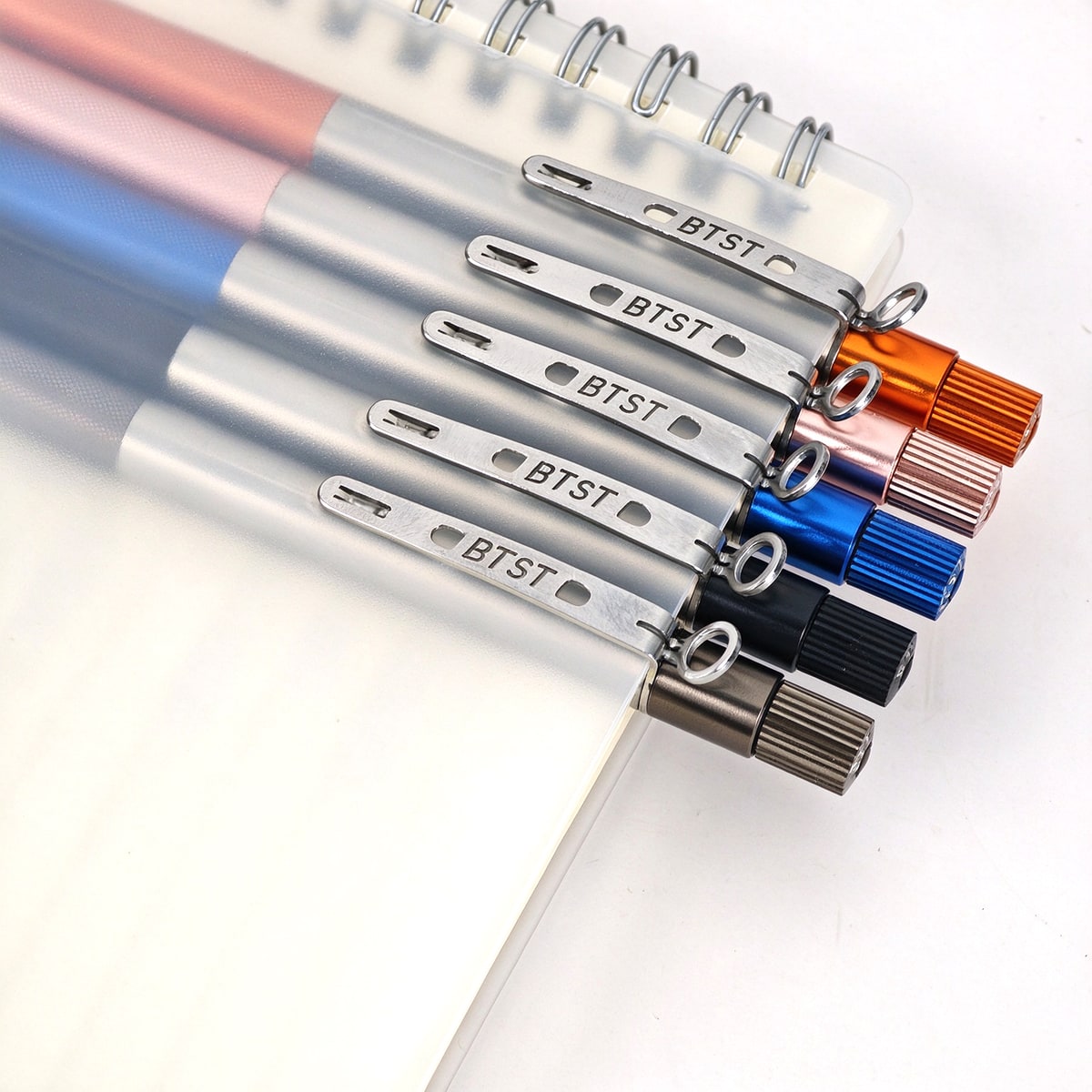
| Colours | Orange, glacier blue, cherry pink, piano black, titanium grey |
Density and hardness of the steel set the basic skeleton: it resists permanent deformation under load and does not develop the spring-back fatigue seen in plastic.The aluminium provides rigidity and machining precision — CNC cutting can carve complex structural detail while preserving strength, which is what makes the one-piece clip and the twist mechanism at the tail possible at all.
Five colourways side by side: the matte base of the steel and the anodised colour combine so that one structure reads consistently across all of them
Structure: three details that shape daily use
First, the grid-textured grip section mid-barrel.A finely raised anti-slip zone aligned with where fingers apply force. When hands sweat over long sessions, the texture adds friction — a lesson every all-metal pen must learn, since metal conducts heat fast and feels slick by nature.
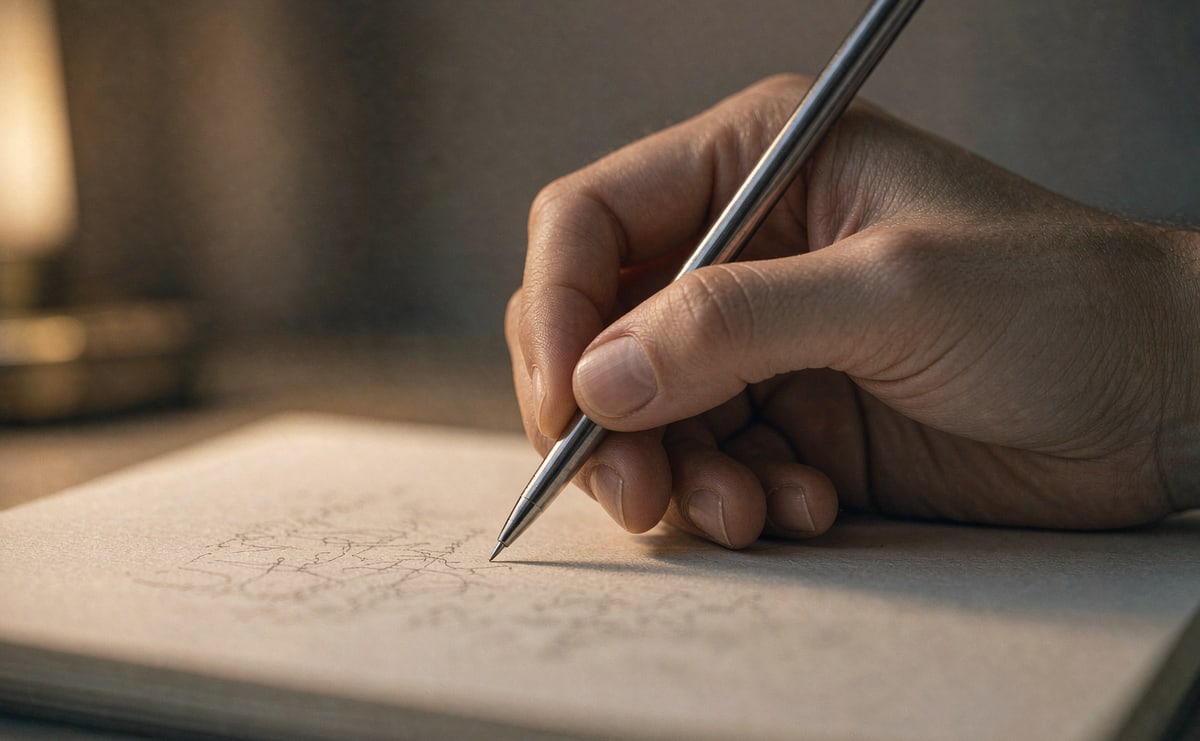
Where the grip section actually sits in use: this part of the barrel falls between thumb and index finger, exactly where pressure is applied continuously
Second, the one-piece metal clip.Cut from a single piece rather than assembled, so there is no stress concentration at a joint. Clipped to a pocket or a notebook, the contact surface is continuous, with no edge to catch.
Third, the twist mechanism.The tip retracts into the tail, fully hidden. In a bag it will not press open and leak, or mark anything it touches.
Surface: what anodising actually solves
Anodising is not "painting" — it forms a dense oxide layer on the metal surface. Its value lies in colour durability and resistance to knocks: everyday knocks will not expose a lighter base colour the way plated parts can. Whether a finish reads mirror or satin depends on how this layer is subsequently treated.
Judged by whether it still reads as a metal pen in five years, this layer does more for perceived longevity than any styling.
Being honest about the trade-offs
All metal has its costs. 22 g is noticeable over a long writing session; metal conducts cold, so it feels cool at first in winter; anodised surfaces dull naturally with use — these are physical properties of the material, not defects, but they are worth knowing when choosing it.
In one sentence: the weight of Da Bao is not styling — it is what remains after 304 stainless and aluminium each take a share of the job in deformation resistance, machining precision and surface durability.