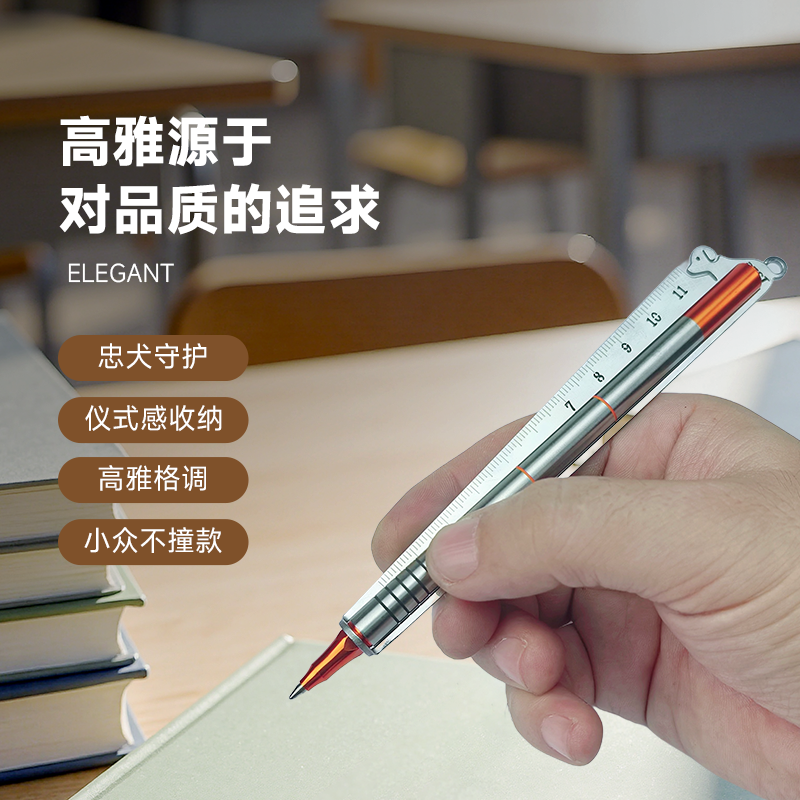
Why the Pen and Its Case Snap Together
The barrel and case locate by magnet and geometry together, not by friction alone. That difference decides whether it can be opened with one hand and whether it gets looser over time.
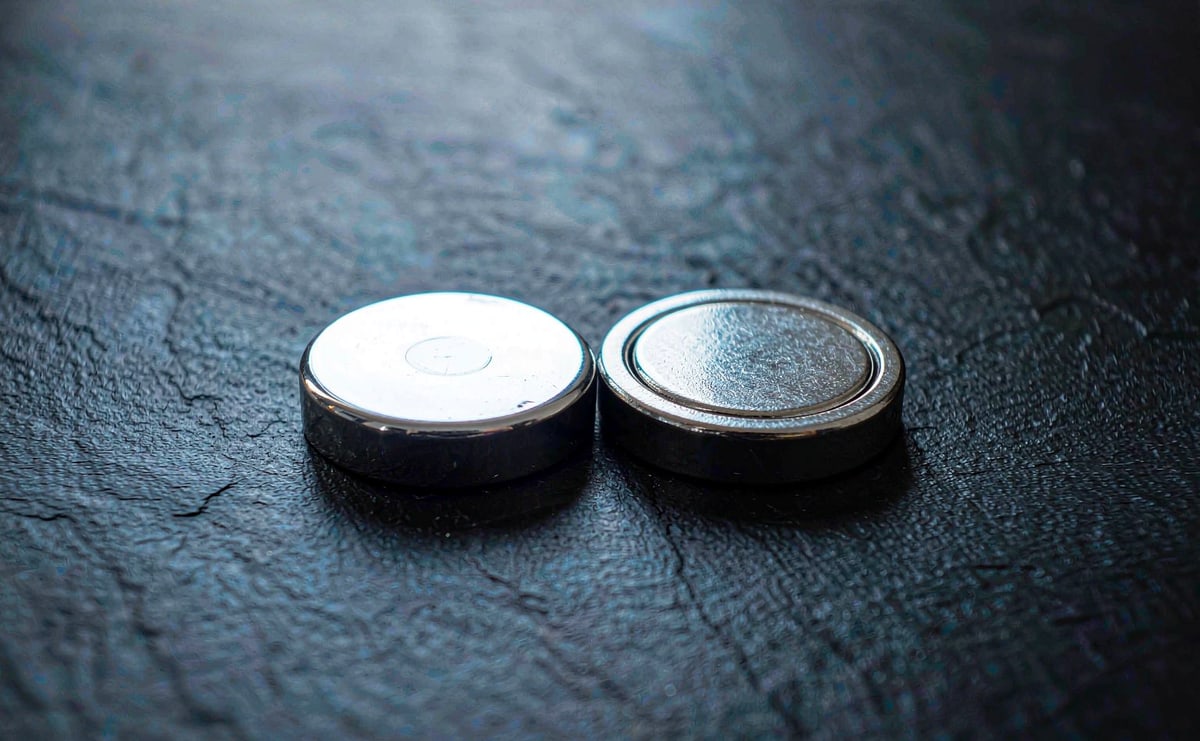
The most obvious way to join two metal parts is friction — make the fit tight and rely on the interference to hold it. The pen-case pen uses another method: magnets handle location and holding, geometry handles guidance and travel. That division of labour decides what happens over time.
Friction fit versus magnetic location
The problem with a friction fit is not the starting condition but its lifespan. Metal parts inserted and removed repeatedly wear at the contact surfaces and the fit loosens; after a few hundred cycles, a fit that was right becomes "a bit loose". Friction is consumed. Magnetism is not.
In a magnetic arrangement the magnet supplies continuous attraction while the guide surfaces control direction and stroke during insertion. Position is guaranteed by geometry, holding is maintained by magnetism — and once those two jobs are separated, the feel of opening and closing stays much the same over long use.
Two small magnets with opposite polarity attracting without any force pushing them together — exactly the difference between "snapped to" and "wedged in"
What happens with two pens
A single pen gives one magnetic joint. Two pens create another layer of relationship. The magnetic orientation of the two barrels is opposed, so when brought together they rotate into the attracting position on their own — the user never has to align them.
The practical significance of this is clearer in gifting than in personal use: "a pair" holds not only in quantity but in structure — two pens brought together find each other's position by themselves.
The twin-pack is the product line built around exactly that: two barrels attracting each other, one complete unit when closed and two independent pens when opened. As a gift for a relationship it says "mutually attracting, never separating", but what supports the phrase is a concrete structural decision about magnetic orientation.
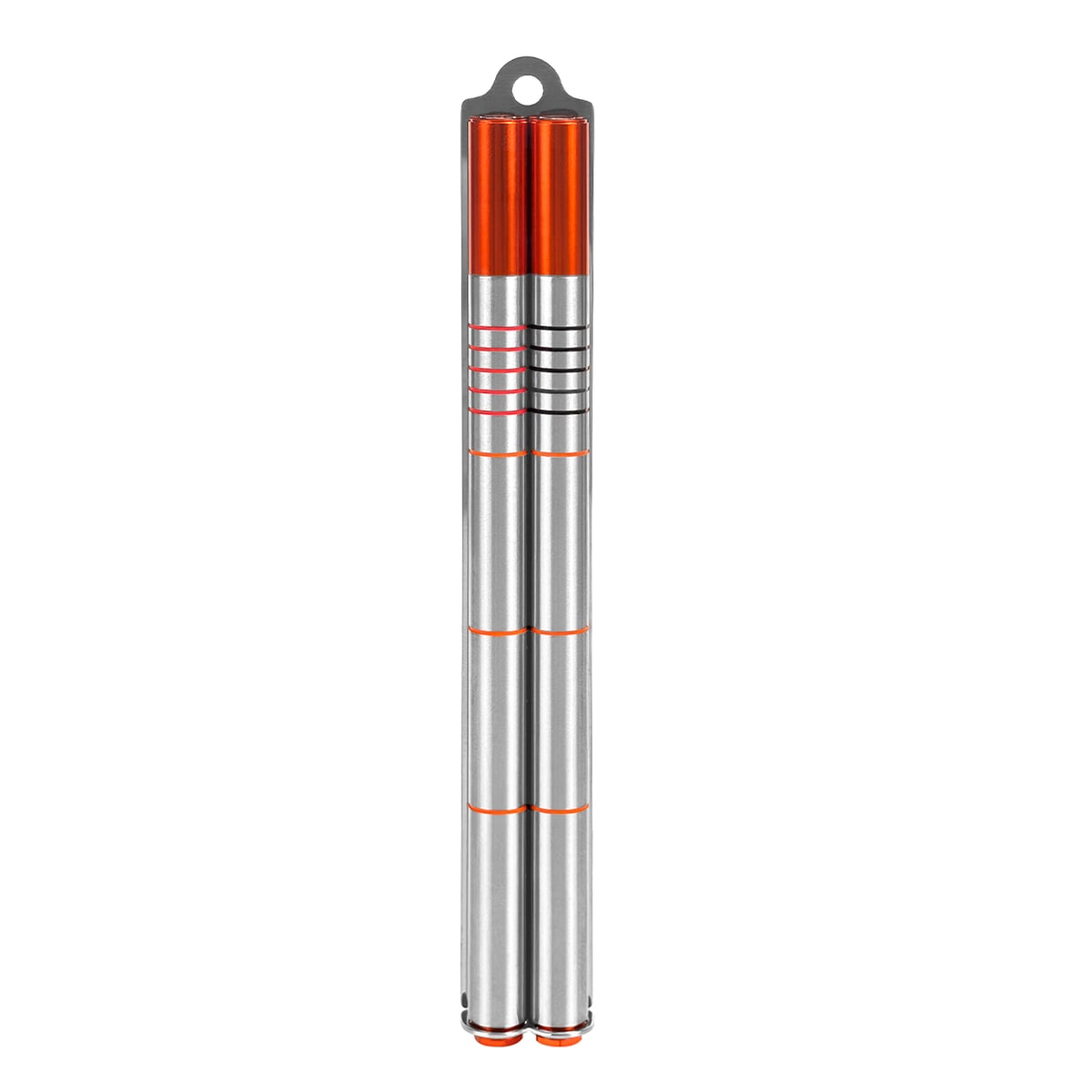
Two pens snapped side by side: no manual alignment needed, the magnetic poles turn themselves into the attracting position
| Point | Friction fit | Magnetic location |
| At the start | Works | Works |
| After several hundred cycles | Surfaces wear, play appears | Holding force largely unchanged |
| One-handed use | Both ends must be held, with the right direction of force | Bring it close and it holds; pull and it releases |
| Consistency of position | Depends on feel | Depends on the guide face, not on feel |
The cost should be named as well. A magnetic joint cannot eliminate the sound of metal meeting metal, and it needs to be kept away from strong magnetic fields; in a bag full of metal objects, cards or paper scraps can get caught between case and barrel. These are inherent to the approach, and worth knowing before deciding.
In one sentence: choosing magnetism over friction is not about showing off a magnet — it is about the feel of inserting the pen still being the same on the five hundredth use as on the first.