Can Pens and Ink Be Stored? Shelf Life, Storage and How to Judge Expiry
How long is a refill actually good for, and does expiry mean unusable? Some pens store well and some do not; sealing and keeping light out are the key variables. Here is a way to judge freshness without opening the pen.
Refill packaging usually states a shelf life of one to three years, but that number is of limited use. What actually decides whether a pen keeps is the ink type, the sealing structure and the storage environment — not the year on the label.
Why oil-based and water-based inks differ so much
As covered earlier, oil-based ink (ballpoint, rollerball) uses solvents, so volatile components diminish over time, viscosity rises and flow degrades. Water-based ink (gel, fountain) is mostly water: once the seal fails or the pen sits tip-up for long, evaporation forms a dry film at the tip that blocks the ink channel.
So for long storage, oil-based refills are far more forgiving than water-based ones.A ballpoint left tip-up for six months may still write after a shake; under the same conditions a gel pen may be permanently dry.
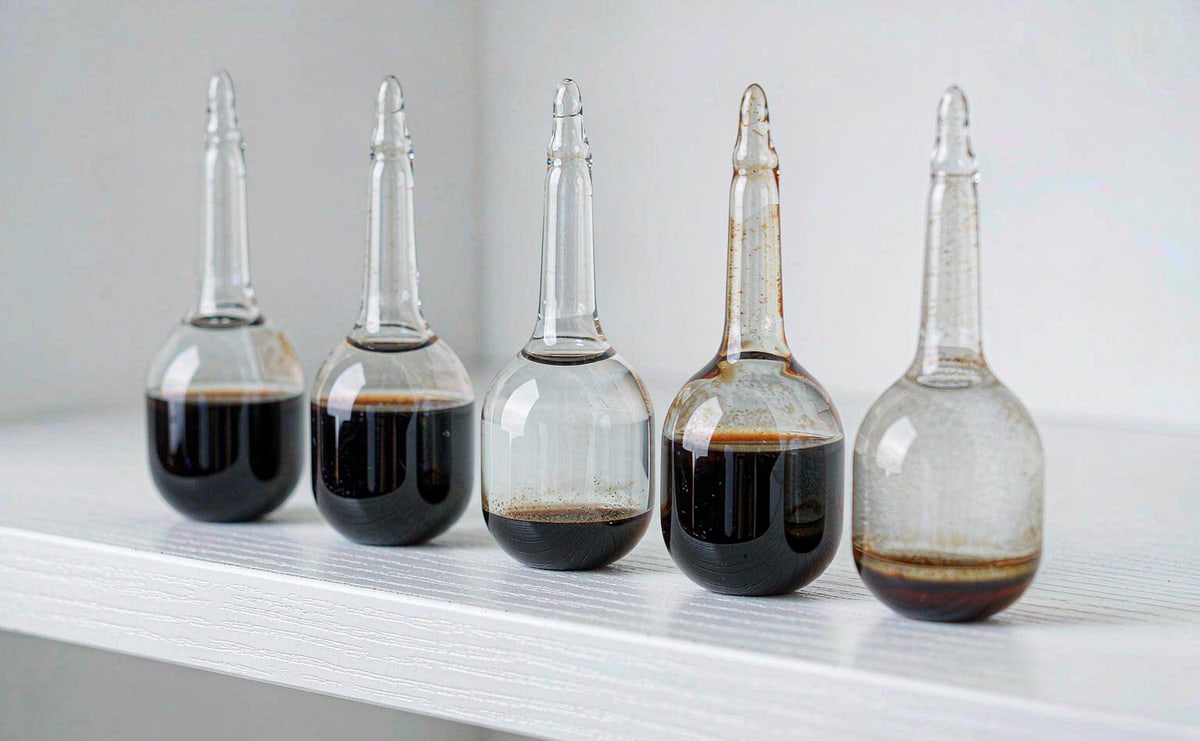
How ink degrades over time: the same liquid becomes prone to separation, flocculation and sediment with age
Three storage rules that genuinely help
One: tip down or flat, never tip up.Simple and effective — it stops gravity from trapping air at the tip.
Two: seal it.Cap on, clip closed, and for long unused periods keep the pen in a pouch or sealed bag. Excluding air slows degradation markedly — many pens that "expired" simply lost on sealing, not on time.
Three: cool, dry, out of direct light.Heat accelerates evaporation and oxidation, and direct sun is especially hard on dye-based inks. Refills are unsuited to long-term storage in a car, on a windowsill or near a radiator.
Judging freshness without opening the pen
Three external checks: look at the tip — if it is dry, whitish or crystallised, assume blockage; listen — shake the pen, and if there is no sound of liquid moving, the ink is gone; test a stroke — intermittent flow or obvious skipping usually means viscosity has risen or the channel is partly blocked.
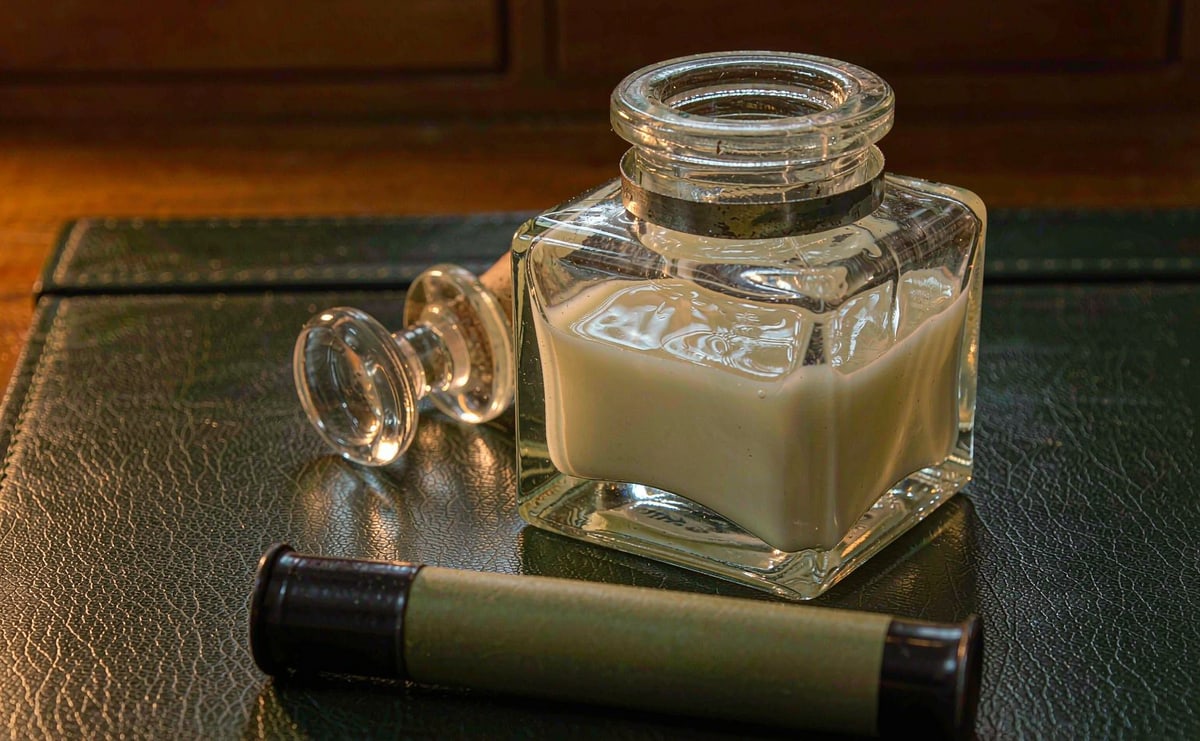
Bottled and cartridge ink share one weakness: they both start to degrade once exposed to air
What to do when a pen has expired
It depends on the symptom. Simple no-flow caused by a dry film is often recoverable: soak the tip in warm water (no hotter than roughly 40°C) for a few minutes, flick it gently, repeat to soften the blockage; oil-based refills can also be shaken tip-down to bring ink back to the ball.
But if the ink has discoloured, separated, flocculated or smells off, the formula itself has failed — this is not a blockage, and continuing would only affect writing quality and the pen, so replace it. Likewise, if the barrel shows rust, plating loss or cracked and aged plastic, the body's integrity should no longer be trusted either.
In one sentence: the shelf-life label is only a reference; oil-based ink tolerates storage, water-based ink does not. Tip down, sealed and cool will extend a pen's life substantially — and a pen that goes bad is usually a sealing failure, not an expiry.