The History of the Ballpoint Pen: How a Journalist Rewrote Writing
From an 1888 patent meant for marking leather to billions of units consumed yearly today — the century of the ballpoint pen is a saga of taming ink.
The ballpoint pen we pick up without thinking took humanity nearly a century to tame. Its core problem was singular: make viscous ink flow onto paper at an even, controllable rate. History answered with a string of names.
From leather marking to wartime altitudes
Public records put the start in 1888: American John Loud patented a rolling-ball pen for marking leather, never commercialized. The one who made it practical was Hungarian journalist László Bíró — noticing that newspaper ink dried fast, he and his brother, a chemist, turned viscous fast-drying ink plus a sealed ball into a workable pen, patented around 1938. The British Royal Air Force adopted it in WWII: no leaks at low cabin pressure gave the ballpoint its first irreplaceable scenario.
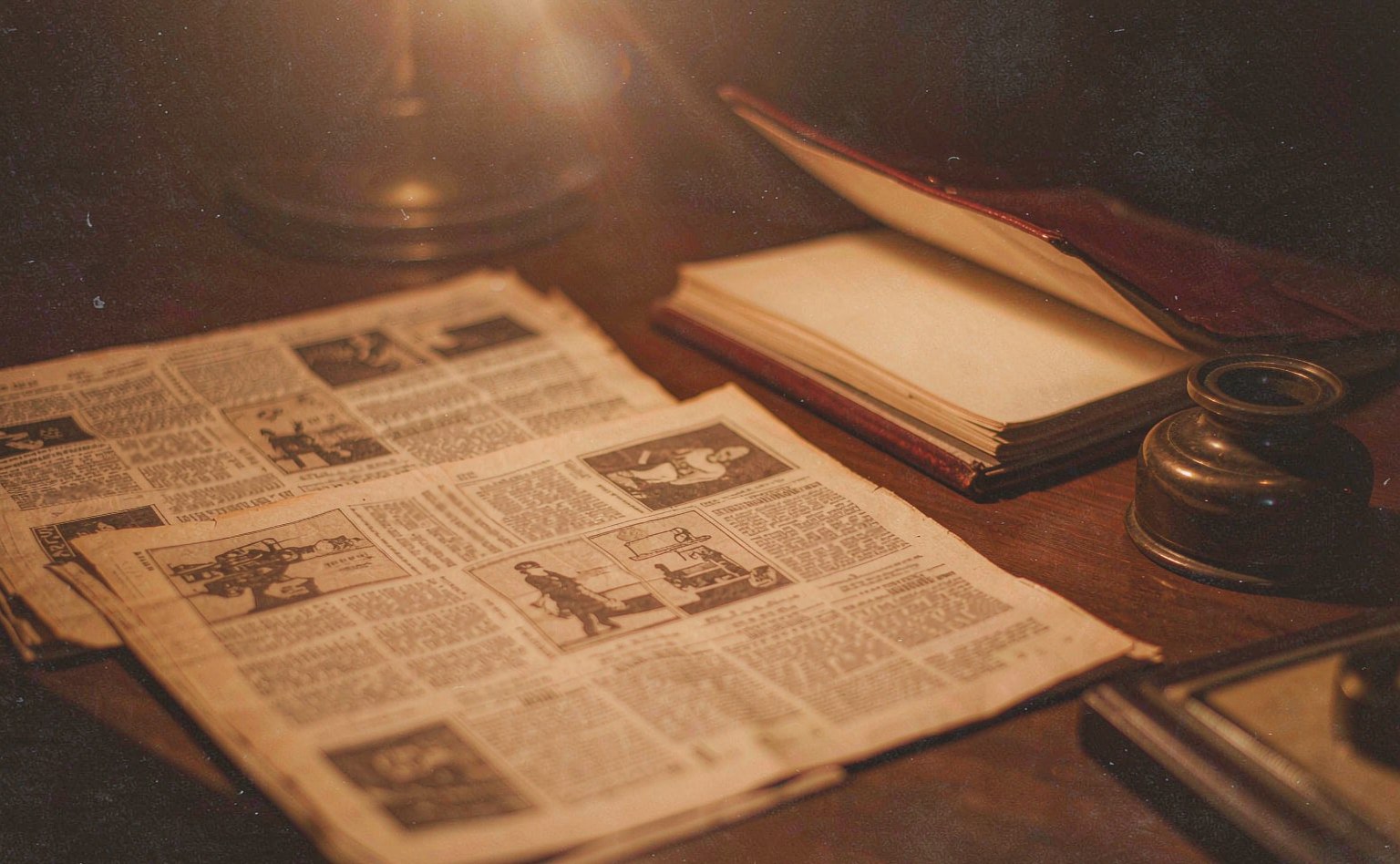
The ballpoint's inspiration came precisely from the fast-drying ink of newspapers
From 12.5 dollars to pennies
| Time | Event |
| 1888 | Loud's rolling-ball patent, never commercialized |
| c. 1938 | Bíró brothers make it practical: viscous ink + sealed ball |
| 1945 | Reynolds "Rocket" launches in New York at USD 12.50 each; over ten thousand sold on day one |
| 1950 | France's Bic launches the Cristal, making ballpoints affordable to everyone |
The principle: a ball with self-restraint
The ballpoint's structure is plain to the point of elegance: a ball a fraction of a millimetre to one millimetre across sits at the tip, half held in the socket, half exposed. As it rolls it carries high-viscosity ink onto paper; at rest the socket seals it against leaking and drying. Viscous enough not to flow freely, fluid enough not to skip — that narrow window is the entire battlefield of ink formulation for decades.
Also, honestly
The ballpoint is not the end: limited smoothness from high-viscosity ink led to low-viscosity gel pens (appearing in Japan around the 1960s). But for "reliable writing at rock-bottom cost", the ballpoint still has no rival — one of the highest-volume, lowest-unit-price precision writing instruments in human history.