Compression, Injection, CNC: How a Pen Body Is Actually Made
A plastic pen and a metal pen are born in completely different ways. This piece explains compression molding, injection molding and CNC — and why all-metal pens can only go the CNC route.
The deepest difference between a two-yuan supermarket pen and a two-thousand-yuan pen is not the brand — it is how the body was born. How a barrel "grows" determines its precision, weight, feel and price. There are three mainstream processes.
Three processes, one line each
| Process | How | Typical output |
| Compression molding | Powder or sheet cured under heat and pressure in a mold, one at a time | Early bakelite barrels, certain celluloid-style pens |
| Injection molding | Plastic pellets melted and high-pressure injected into a steel mold, seconds per piece | Almost all plastic gel pens and ballpoints |
| CNC machining | A solid metal bar cut layer by layer on CNC machines | All-metal pens, premium barrels, structural parts |
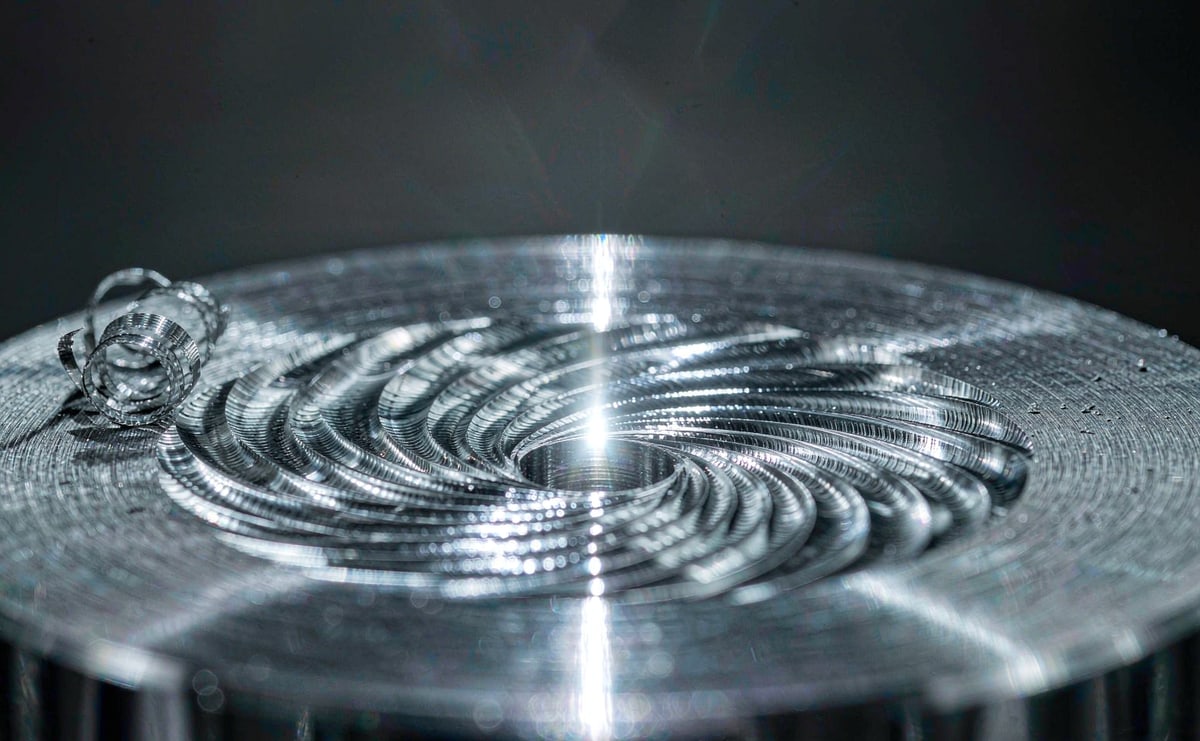
Spiral tool marks left by CNC cutting — the "fingerprint" of a metal barrel
The fundamental difference
Injection molding is "one mold, an army of copies": tooling is expensive (tens to hundreds of thousands), but marginal cost per piece is tiny — ideal for selling millions of one shape. Precision is limited by the mold and plastic shrinkage; wall thickness and parting lines are unavoidable.
CNC is the opposite: "every pen is cut from scratch". No mold; any design change is just a program change. Tolerances reach hundredths of a millimetre, and the feel is the heft of solid metal. The cost: each piece is expensive and slow — the only answer for small batches, many models, high demands.
Why all-metal pens can only go CNC
304 stainless and 6063 aluminium cannot be "injected" — their forming temperatures and behaviour leave only cutting. Machining from one solid bar gives two things a buyer can perceive: a barrel with no parting line, and dimensional consistency verifiable by instruments. The first is looks; the second is what a ten-year warranty stands on.
Also, honestly
CNC is not automatically superior: it is slow and expensive — a two-yuan pen machined this way would be a disaster. Processes have no rank, only fit: for huge volume at low price, injection is right; for small batches, feel and long service life, CNC pays off. When you check a pen's material, you are really choosing how it was born.