How Much Can One Refill Write? Labelled Distance vs Real Output
Labelled distances of 500, 800 or 1,200 metres — where do those numbers come from? Convert them into words per refill and the spread turns out larger than expected: writing angle, paper, grip and whether you re-write all move real usage well above or below the label.
A refill is marked "800 m" or "1,200 m", which sounds like a lot. Converted to everyday writing, a standard gel refill typically delivers 300–600 m of real writing — a noticeable gap from the label.
How the labelled distance is measured
The figure is a length measured under standard conditions: a set angle, pressure and speed, drawing along test paper such as a line gauge. With variables controlled, one rotation of the ball lays a line of fixed width, so distance converts precisely into ink volume.
The problem is that no real writing meets any of those conditions: small characters mean a slower stroke and more ink per unit area; large characters cover the same length faster and waste less; pressing hard deforms the ball against the paper and increases output.
Converting to words makes it concrete
| Use case | Average spacing | 0.5mm per km | 1.0mm per km |
| Large characters (headings, copying large text) | 15–20mm | ~50,000–67,000 characters | ~30,000–40,000 characters |
| Normal Chinese writing (body notes) | 8–12mm | ~80,000–125,000 characters | ~50,000–75,000 characters |
| Small annotations, dense records | 4–6mm | ~170,000–250,000 characters | ~100,000–150,000 characters |
This table makes one thing clear: the same refill can differ threefold in real output depending on use.So "1,200 m" only carries meaning under specific conditions.
The four variables that actually separate results
Writing angle. Writing upright — pen nearly perpendicular to the page — gives the shortest effective rolling path. The more the pen is tilted, the longer the path the ink has to cover, so the same ink is spent over more distance. This is the most overlooked variable and the easiest to correct.
Paper absorbency. Coarse, absorbent stock pulls more ink into its fibre; characters of identical width look the same but consume measurably more.
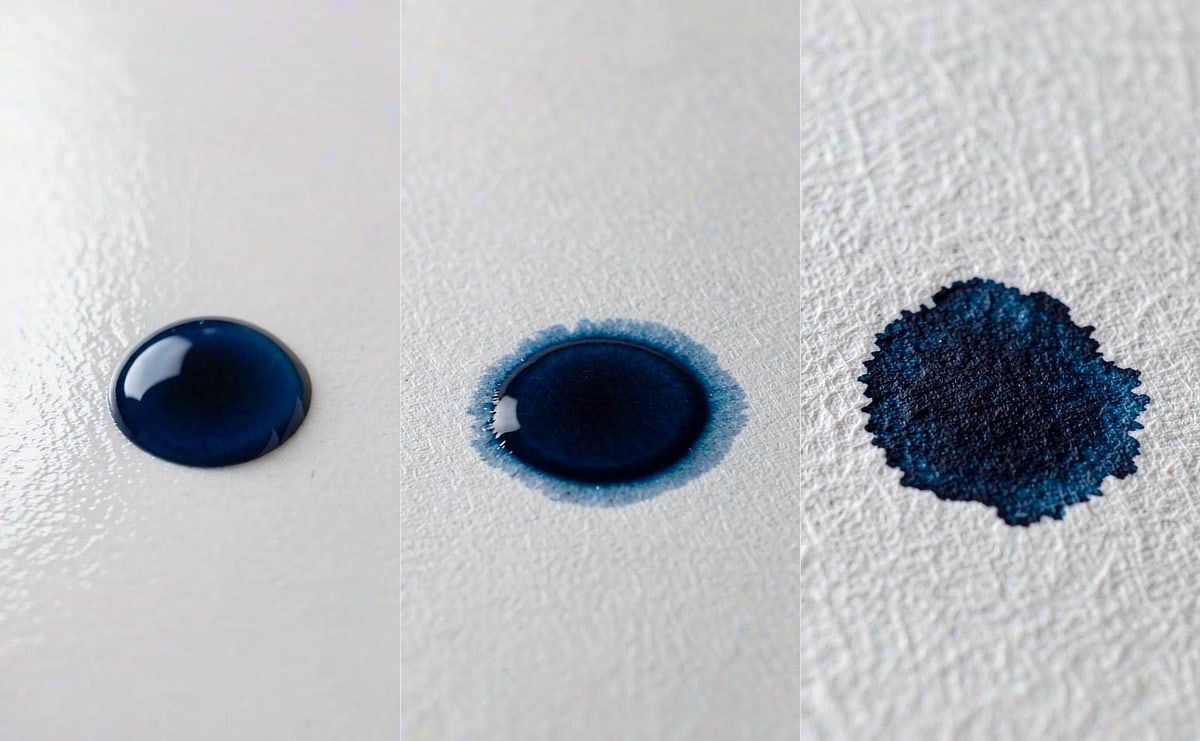
One drop, three papers, three results: coated stock holds a round bead, offset paper spreads slightly, rough stock feathers — identical apparent line width, very different ink consumption
Grip and pressure. Pressing harder enlarges the contact patch, increasing output per unit length and making the paper more likely to scuff and break the line. Steady, light movement is the most ink-efficient.
Revision habits. Crossing out and rewriting, circling and annotating mean far more ink is laid down than the final copy contains. Heavy revision visibly shortens the replacement cycle, even though the finished document is short.
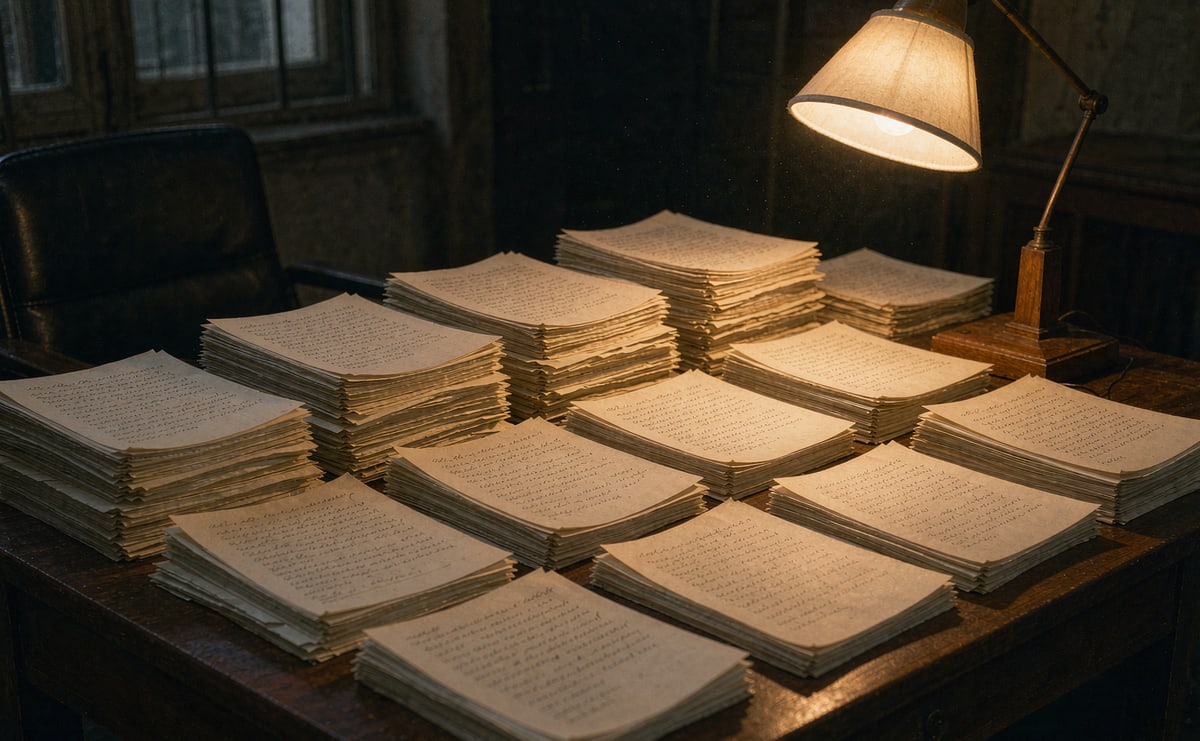
In continuous note-taking, paper runs out far faster than the refill — dozens of sheets per refill is normal
So the practical advice is
If lifespan matters, do not read the labelled distance alone — estimate from your own use: for everyday Chinese notes, 8–12mm spacing means a 1,000m refill writing tens of thousands of characters is a reasonable expectation; dense exam writing may run longer; large-character copying is more economical.What matters more is choosing a refill with steady flow — one that needs a pause every third line will not last long, whatever the label claims.
In one sentence: the labelled distance is a ceiling measured in a laboratory, not a promise; convert it to characters, then adjust for your own habits.