Material Compliance: Stainless Tube Passes Third-Party RoHS Testing
Test reports for the 304 stainless tube and silicone parts used in our pens are available to buyers on request.

For any product moving into retail and cross-border channels, material compliance is not a nice-to-have — it is a gate. Marketplace spot checks, supermarket listing requirements, EU and US import clearance, and corporate supplier audits all request the same set of documents before a partnership begins. Missing one report often means missing one channel.
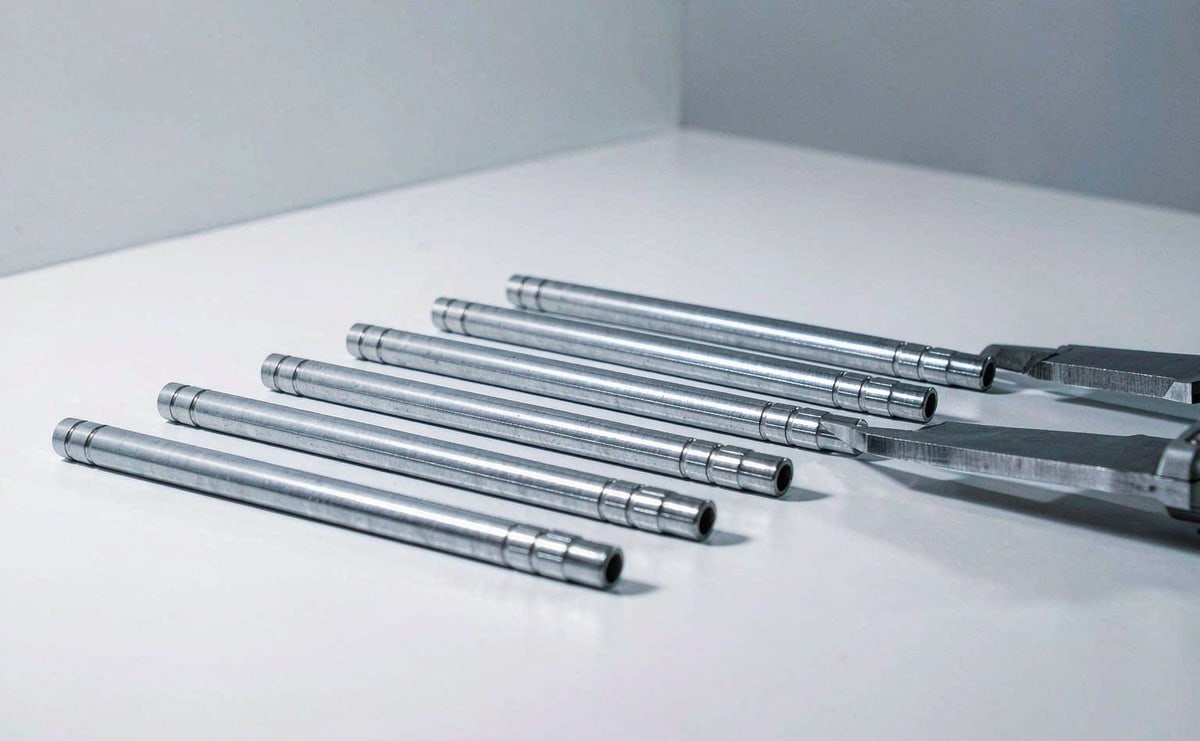
The 304 stainless tube used in our pen barrels has been tested by a third-party laboratory for RoHS compliance (report no. U10202230519605-1E, May 2023), and a 304 material certificate is available alongside it. The silicone components paired with the barrel carry their own RoHS test documentation.
What RoHS actually restricts
RoHS — the Restriction of Hazardous Substances Directive — limits ten substances including lead (Pb), mercury (Hg), cadmium (Cd) and hexavalent chromium (Cr6+). A pen is not an electrical product, but the moment it enters a retail channel that also carries electronics, or ships as a gift set with any electronic accessory, the bundle falls under the directive. Spot checks in European and North American markets use the same substance limits as the baseline.
Why all-metal pens need particular attention
An all-metal body cannot rely on a plastic shell to isolate the metal from the user. The barrel, the nib, the feed and the grip are all in prolonged contact with skin. Material safety therefore cannot be engineered around structurally — it has to be proven by the material itself and by test data. This is one of the reasons we chose 304 stainless over ordinary steel for the barrel: it is a food-contact-grade material, dense and corrosion-resistant, and the patina it develops over time does not affect use.
How buyers should verify
When requesting documentation, check three things: that the report number and issuing laboratory can be traced; that the sample description covers the specification you are actually buying, including tube diameter, wall thickness and surface finish; and that the report date is valid for your production batch. We provide the complete test file matching the report number for your own compliance filing and channel registration.
For material documentation needed for registration or customer audits, submit an inquiry with your model and quantity and we will attach the corresponding test files.