Is "Lead-Free" Pencil Really Lead-Free? Graphite and Clay Inside
Pencils never contained lead — they write with graphite. Beyond that trivia lie practical questions: why mechanical leads come in 0.5 and 0.7mm, why harder graphite writes lighter, what HB and 2B actually mean, and why lead-free is not the same as non-toxic.
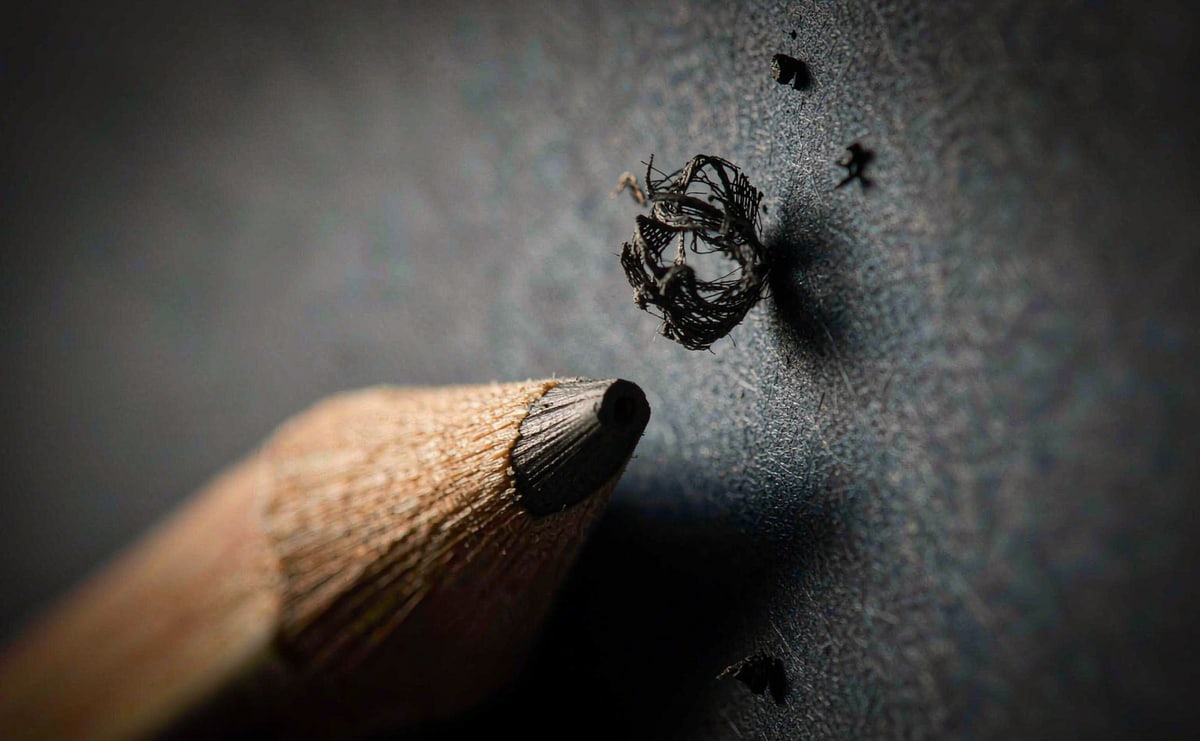
A pencil's core is not lead — it is a compressed mixture of graphite and clay in varying ratios. More clay means a harder, paler, finer line; more graphite means a softer, darker, blacker one. That single ratio explains everything about pencil hardness.
The word "lead" is really a name for graphite
Graphite was long treated as a lead-like mineral in both ancient China and Europe, and the English word graphite and many historic pencil-maker names come from that. Only when analysis confirmed it is an entirely different element from lead did "pencils contain no lead" become common knowledge.Lead remains, however, an element that must be strictly controlled in materials and product testing — which is why lead-free marking appears on pencils. It refers to a limit on lead content, not to the absence of a writing element.
Hardness grades: from HB to 9B
Two parallel systems are in use: the HB system combines H (hard) and B (black) with numbers for degree — HH very hard, 9B very soft; the numeric system grades hardness directly from 1 to 9, with 2B roughly matching HB.
Two practical rules: use a hard lead (H, 2H) for light, minimal marks, and a soft lead (2B, 3B and softer) for dark, prominent lines; hard lead erases cleanly, soft lead lays down dense colour and resists erasing.Exams and optical marks generally specify 2B precisely because it is dark, covers more area and is easy to detect.
The dark core exposed after sharpening: softer leads shed more dust when sharpened and lay down darker colour
Mechanical pencil leads: why they are sold by millimetre
Mechanical pencil leads are sold by diameter, commonly 0.5mm and 0.7mm, with 0.35mm ultrafine leads in some products. This is the same logic as ball diameters on ballpoints: diameter sets line thickness and structural strength.0.5mm leads are fine and break easily but give delicate lines for small text and ruling; 0.7mm leads are sturdier, suited to long writing sessions and drafting.
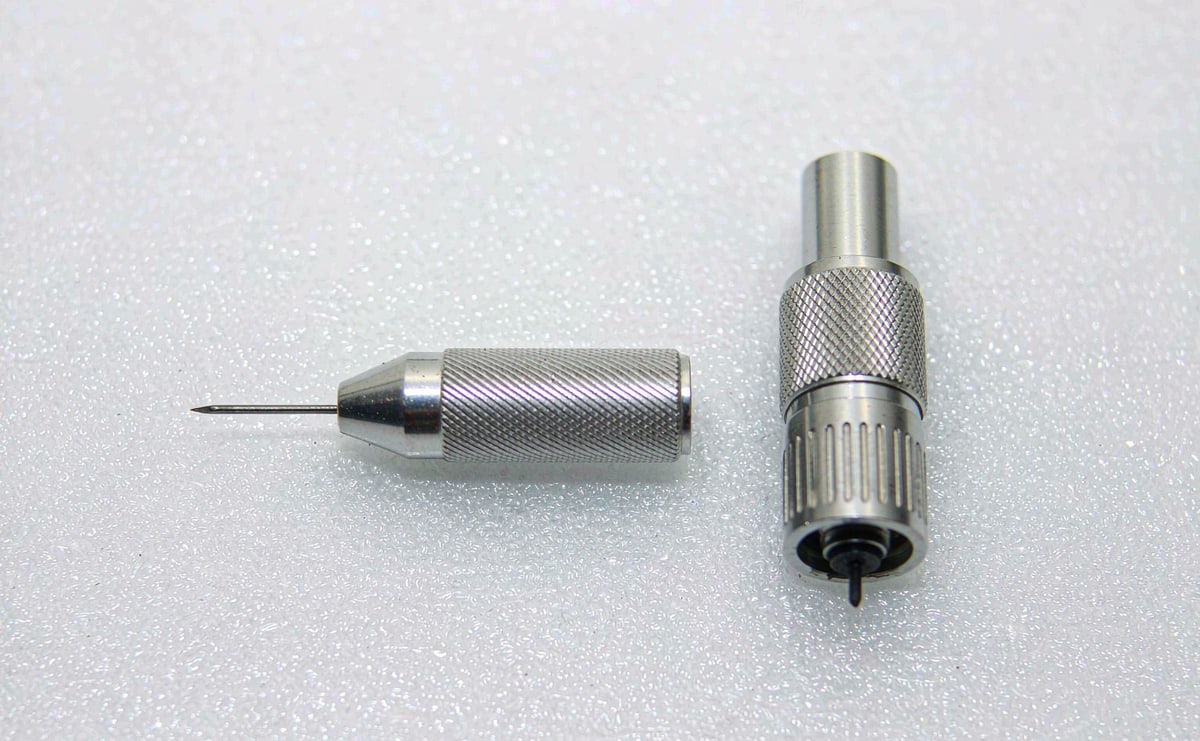
Inside a mechanical lead: an outer metal sleeve carries the load while the thin core feeds and writes
Lead-free is not the same as non-toxic
This is the distinction that matters most when choosing stationery for children. Graphite and clay themselves are not the hazard; the risk comes from cheap products using lead-containing pigments or poor-quality colouring.Judging whether a pencil is safe means reading the applicable standard and certification marks, not the words "lead-free". Lacquers on the wooden barrel and the composition of erasers also deserve attention — genuinely certified products control those points too.
In one sentence: pencil lead is graphite plus clay, hardness set by the clay ratio; "lead-free" states a limit on lead content and is not the same judgement as "non-toxic", which requires checking the standard and certification.