Five Things That Decide Whether a Refill Writes Well
Two refills from the same pen can feel like different instruments. The gap is not price — it is ball size, ink viscosity and surface tension, tip structure, flow control, and how the ink matches the paper.
When buying a pen, people look at the body: is it solid metal, is it magnetic, how heavy does it feel. But what actually decides whether a pen writes well is the few millimetres inside the refill. No matter how finely the body is made, a weak refill writes lines that drag, break or bleed.
1. Ball size: the most direct feel variable
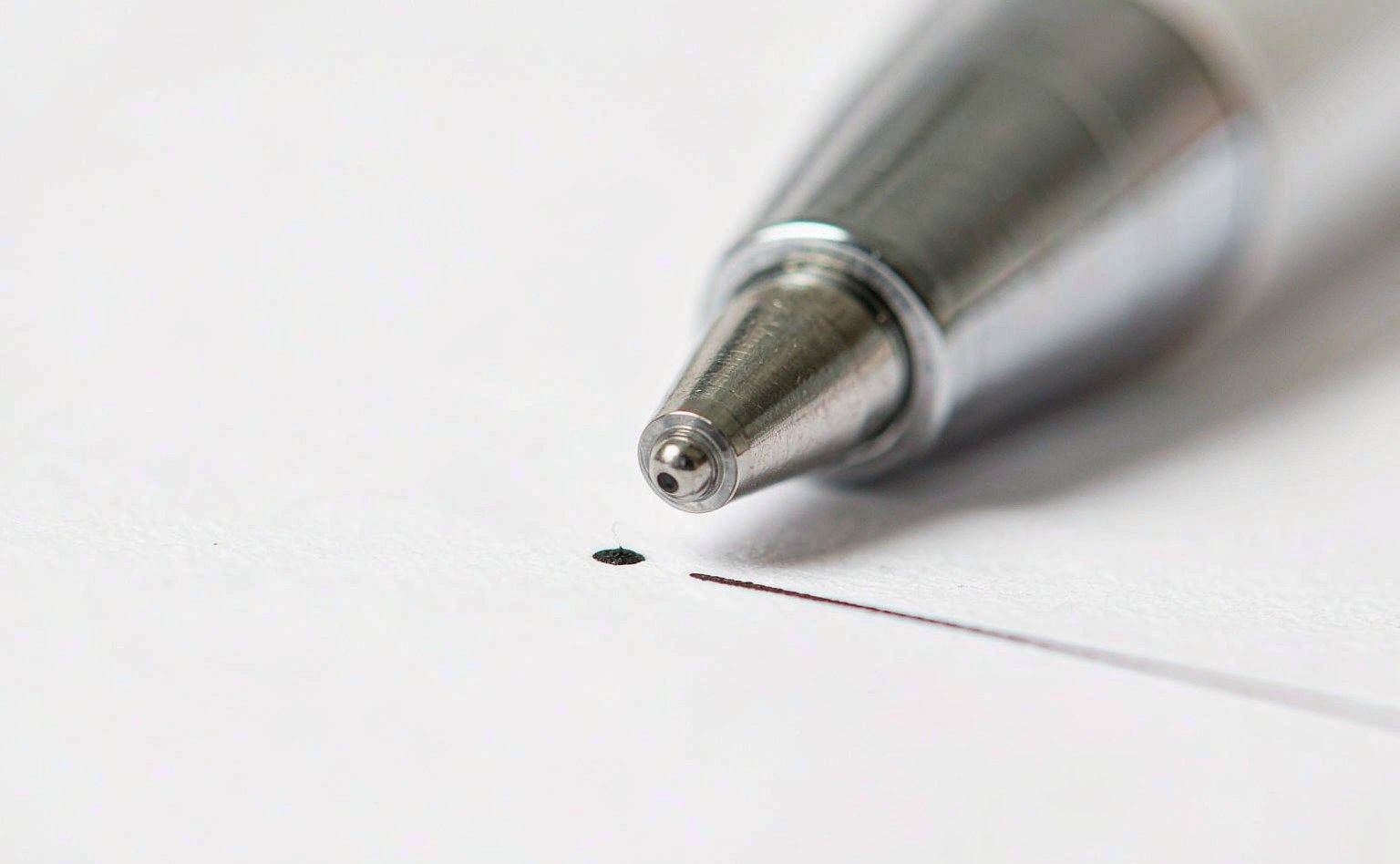
The little ball inside a ballpoint tip is the ball (socket). Common sizes run from 0.5mm to 1.0mm. A larger ball means less writing resistance and smoother lines, but wider strokes that skip more easily; a smaller ball gives fine lines for small annotations, at the cost of a slightly "catchy" feel — exam and labelling use is widely specified at 0.5mm. The same ink in 0.5mm and 1.0mm is effectively two different tools.
2. Ink viscosity and surface tension: smooth or sticky
Too thin and the ink cannot keep pace with the tip, so fast writing breaks the line; too thick and you must press to get flow, which tires the hand. The industry describes this with viscosity and surface tension. What daily writing needs is "exactly enough" — one rotation of the tip lays down an even hairline, no more, no less. This is where refill makers differ most, and where buyers notice least.
3. Tip structure: not "just a ball"
The socket, the ball and the small ink channel inside the tip together determine the ink path. With sound geometry the ink lays a uniform dot; with deviation you get broken edges, feathering or forking. A rollerball relies on the ball rolling and carrying ink, a gel refill uses the ball-and-socket fit to pick ink up — the writing logic differs entirely, so refills are not interchangeable.
4. Flow control: the most underrated factor
Whether a pen stays good over months depends on how well stored ink volume and flow rate match. Too little storage and you are constantly replacing; unbounded flow and the tip pools ink and smears. For long-term use, "rarely needs replacing" and "smooth from the first stroke" matter equally. This is where refill brands separate.
5. Paper: the neglected third party
Even a good gel refill can hesitate on very smooth coated stock or on an already-written page; newsprint and copy paper absorb fast and demand higher viscosity. Pen, refill and paper have to match — that is the real experience. No refill is perfect on every paper.
The body changes the feel in your hand; the refill decides the feel on paper
How to judge for yourself
Check three things: line width against your use (0.7mm daily, 0.5mm for annotation or exams); whether fast continuous writing breaks the line — a direct test of viscosity and channel flow; and whether the tip pools ink. Pass all three, then weigh storage volume against price. Most complaints that "this pen does not write well" are explained by these five variables.