Why Exams Mandate 0.5mm: The Logic Behind One Line Width
The 0.5mm requirement in exam rooms is often read as "thin is easier to read". It actually solves four problems at once: recognition, machine scanning, writing inside fixed boxes, and writing speed. That is engineering design, not taste.
Almost everyone who has sat an exam has heard the rule: use a 0.5mm refill. The reason is not that 0.5 looks better — 0.5mm is the only line width that satisfies human marking, machine scanning and box-confined writing at the same time.
First, look at what it has to fit into
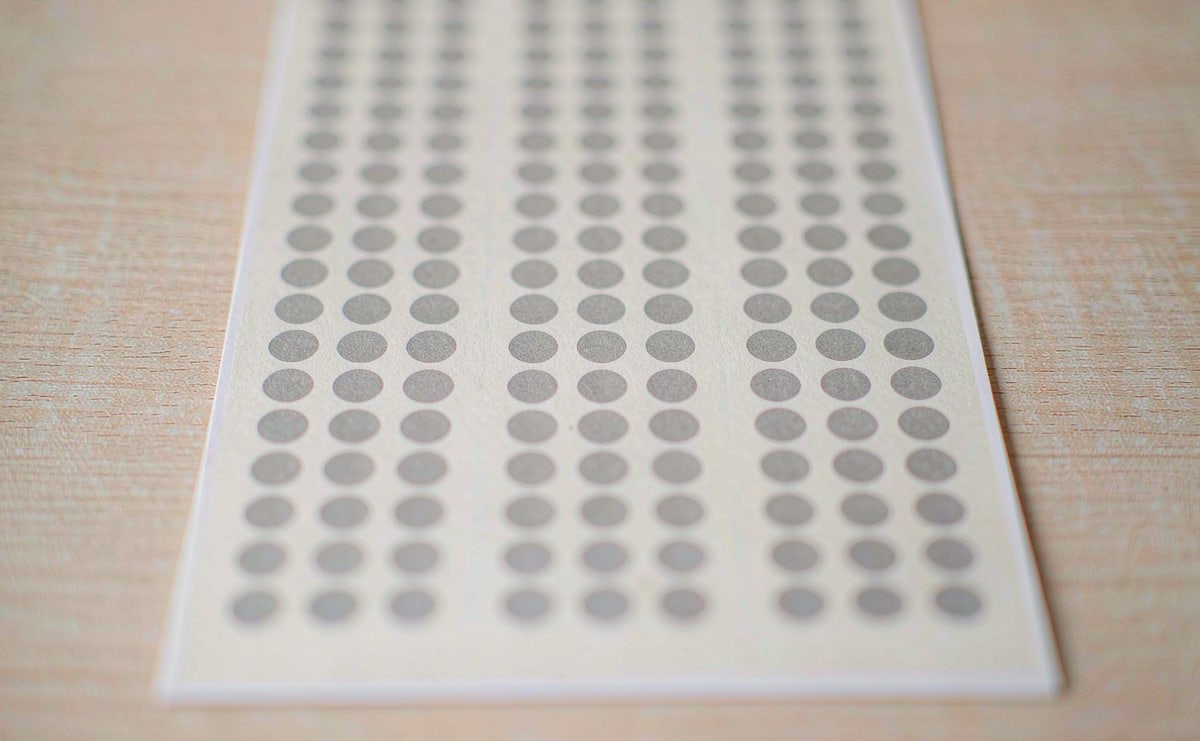
Answer-sheet options sit in a fixed grid, usually with cells around 5mm on a side.
Answer-sheet cells leave narrow clearance: the mark must land inside the cell without touching the boundary lines — which fixes the acceptable line width by geometry alone
Too thick and the stroke smothers the cell edge, so a human marker reads two options as one; too thin and the scanner may see a broken line under paper noise and fibre, and the machine reads it wrong. 0.5mm lands in a narrow band between the two.That is not an average — it is dodging both failure modes at once.
Machine recognition is the hardest constraint
Most objective sheets today are scanned and judged by software locating filled bubbles. The algorithm needs a mark with clear boundaries, high connectivity and a reasonably centred position.A thin mark may scan as disconnected; a thick one may spill outside the target area or bridge into the next cell. A mandated line width is, in effect, a stable target for machine vision.
Confined writing: why neatness cannot be the goal
The other consideration is throughput. Chinese characters and numerals must stay inside the cells. A wider tip gives fewer strokes within the same height, so complex characters collapse together; a finer line keeps structure legible in a tight space. Thin is therefore not only better for reading — it also lowers the odds of errors and corrections.
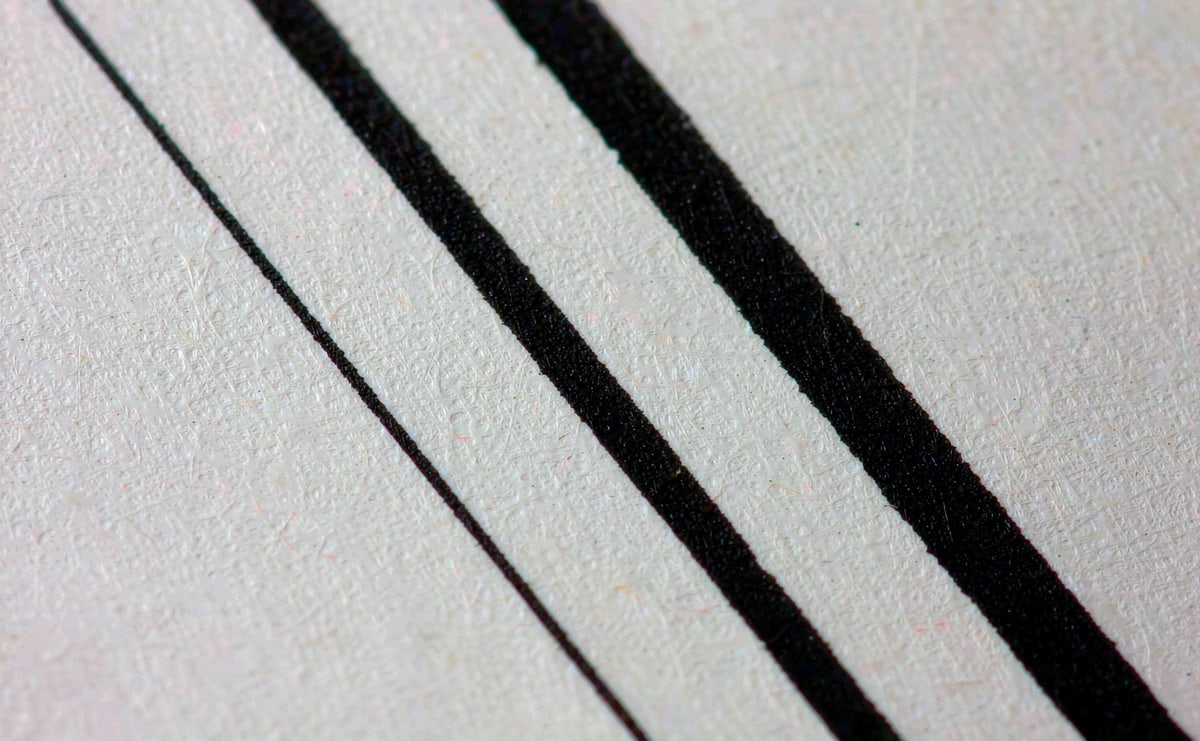
What different widths actually look like: fine lines hold structure in dense writing, broader lines take less effort over long fast sessions
Three things worth being clear about
First, 0.5mm is a refill specification, not a ball diameter — the ball deforms slightly against the paper depending on material and pressure, so the real line is usually a little finer than nominal. Second, exams do not optimise for personal preference: 0.7mm is perfectly fine for daily writing, and 0.5mm in an exam is a rule, not a verdict that 0.7mm writes badly. Third, what actually affects marking is consistency — a 0.5mm refill with steady flow beats one that varies stroke to stroke.
In one sentence: 0.5mm is not "thinner is nicer" — it is the width that lets one line be accepted by both eye and machine, still fit inside the box, and still be written fast enough.